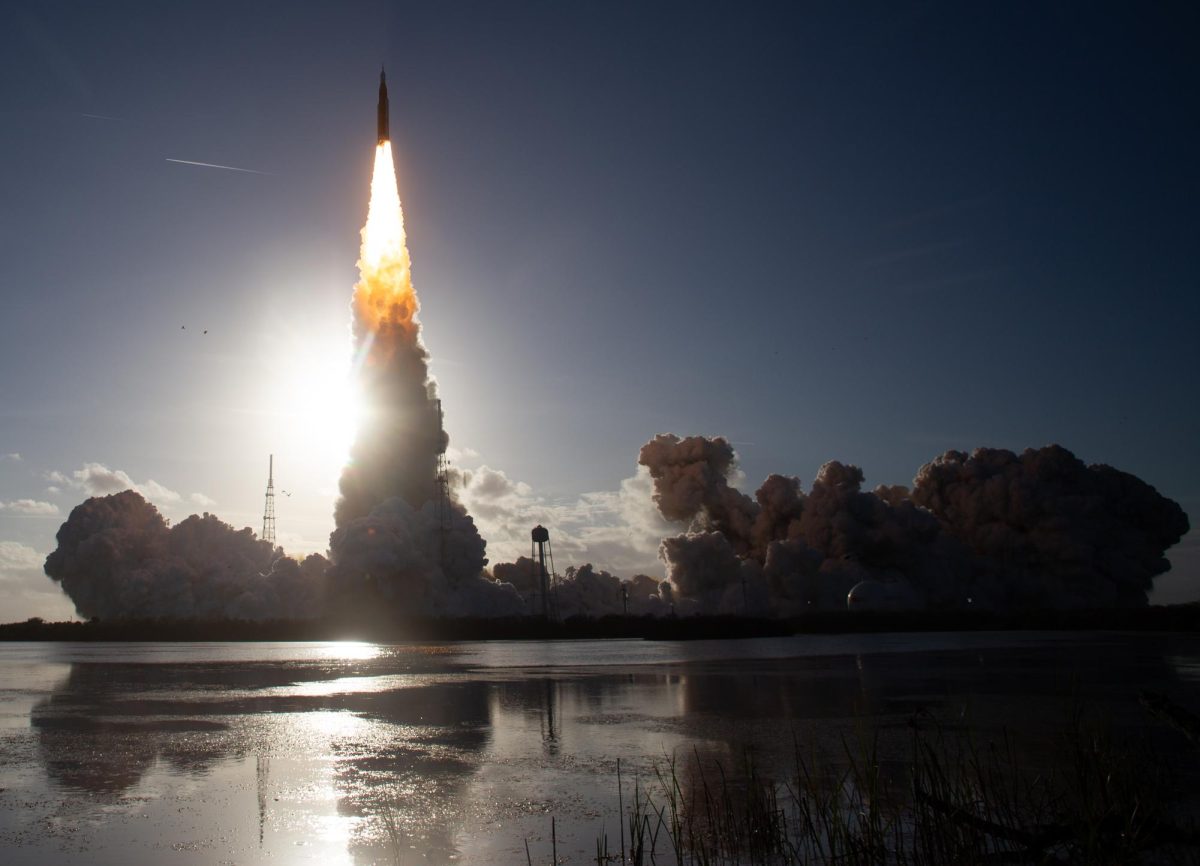
It has been over 50 years since man last stepped foot on the Moon. The last lunar mission was conducted in 1972, and now, for the first time in 50 years, we’re heading back. The Artemis program, which was launched in 2019, is flying its first critical out-of-Earth orbit mission. Artemis II will serve as a test flight and precursor to lunar landings happening on Artemis IV, along with every subsequent mission afterwards. Key life support systems will be tested, the functionality of the Orion capsule will be monitored, and valuable insight about lunar geography will be gained.
Artemis II, which launched on April 1 at 6:35 PM EDT, will be following a free return trajectory. In essence, Artemis II accelerated fast enough to extend its orbit far enough to reach the Moon. Once close enough, Artemis will be pulled towards the moon, closer and closer, until it is flung around the back side of the Moon back towards Earth. This means Artemis II will only be able to view the Moon for 7 hours, but it also ensures that the crew can get back quickly and safely. Because this mission is a test flight, NASA is not fully committing to a lunar orbit yet. The last time this type of maneuver was conducted was in 1970 by the Apollo 13 crew. This will also be the only Artemis mission to use a free-return trajectory in the entire program.
The crew of Artemis II will perform a lunar flyby on April 6th. The maneuver will commence at 11:45 AM and last for around 7 hours, ending at 6:20 PM. During this lunar observation period, multiple milestones will be achieved, including a lunar eclipse where the Moon and the Sun will overlap, starting at 5:35 PM and ending at 6:32 PM. This lunar flyby will also coincide with the farthest distance humans have traveled from Earth. A record currently standing at 248,000 miles, which is expected to be broken by over 4,000 miles at 10:56 AM. These times are all subject to slight change; space is vast, and getting exact times on certain things is very difficult.
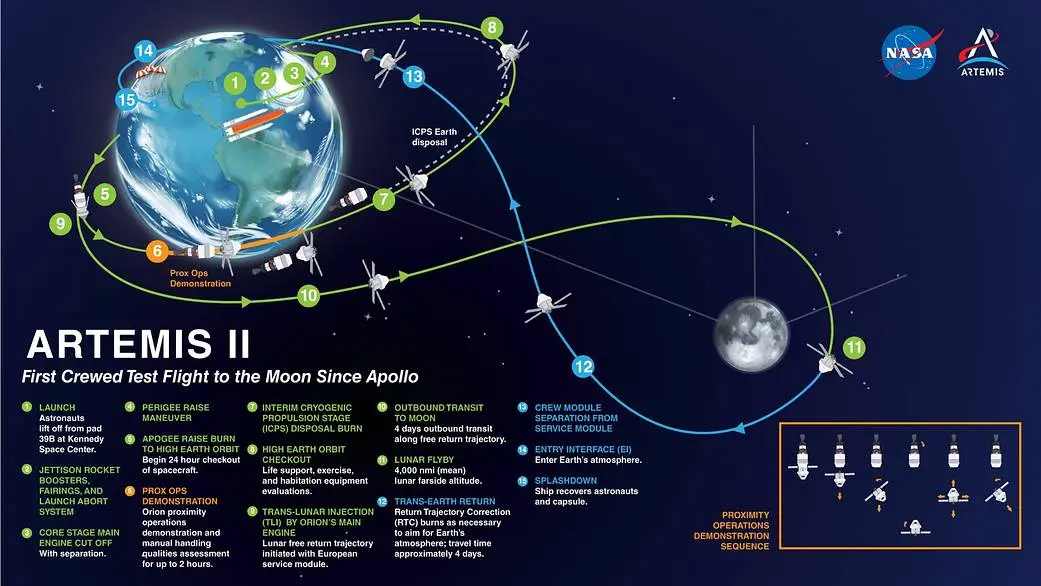
Artemis II is hoping to do a myriad of things during the lunar observation period. Firstly, the crew will test out several key functions of the Orion space capsule and ensure its safety for future lunar landings. Astronauts will also analyze specific geographic features of the Moon, such as the Orientale basin, which will provide vital insight into the geology of the Moon. Images gathered from the lunar flyby will prove essential in planning longer-term missions beyond the initial landings. Finally, parts of the lunar darkside that have never been seen before will be observed and provide valuable data for scientists back at Houston.
Aside from these massive physical milestones, Artemis II is also creating massive social milestones. This flight will include the first woman, person of color, and non-American to go to the Moon. This only adds to the significance of this flight and the promises it sets up for the future. Artemis II isn’t just about taking a trip to the Moon; it’s about setting up the new space age. The age where everyone is included, the one where every step and leap is made by all humanity for all humanity. The 1960s was the American space age; this is our space age.